Peru · Travel guide
11 Things to Do in Lima, Peru, in One or Two Days

Eleven things to do in Lima on a one or two day stop, with the official fees and closing days, and why Lima is the easy start to a Peru trip.
This is the reasoning we use when we date a trip, not an article written to fill a blog. The Peru itineraries it feeds are here.

Lima is where nearly every Peru trip lands, and most people give it one or two days. That is enough for the things to do in Lima that matter: an adobe pyramid more than 1,300 years old in the middle of Miraflores, the cliff walk over the Pacific, Barranco, the colonial centre, one serious museum and, if there is a spare morning, Pachacamac or the sea lions off Callao.
Below are the eleven, grouped by area so you do not cross the city twice, with the fees and the closing days from the official records. Two of them close on different days of the week (Huaca Pucllana on Tuesdays, Pachacamac on Mondays), and that alone decides how you order them.
The eleven at a glance
| Fee | Closed or open | |
|---|---|---|
| Huaca Pucllana | S/ 15, guide included | Closed Tuesdays |
| Malecón walk to Parque del Amor | Free | Open 24 h |
| Puente de los Suspiros | Free | 8:00-20:00 |
| Plaza Mayor | Free | Always open |
| Cathedral of Lima | S/ 30 | Sundays from 13:00 |
| San Francisco convent | Check on the day | Check on the day |
| Larco Museum | S/ 50 | Open daily |
| Circuito Mágico del Agua | S/ 5 | From 15:00 |
| Ceviche at lunch | Menu price | Lunchtime |
| Pachacamac | S/ 15 | Closed Mondays |
| Palomino islands | S/ 11 park fee | Weather permitting |
Lima sits at sea level, Cusco does not
This is the first thing to know before you plan the days. Peru’s national tourism inventory puts the Plaza Mayor of Lima at 163 m and the Plaza de Armas of Cusco at 3,400 m. That is a jump of about 3,240 m, made in one short domestic flight.
So Lima is the place to recover from the long flight, eat well and sleep, and the city asks nothing of your lungs. We put two nights here at the start of a trip for that reason, not because Lima needs more time than Cusco. Our guide to South America altitude explains what to do once you are up in the Andes.
Day one: Miraflores and Barranco
Most visitors sleep in Miraflores, and the first day can be done on foot and with one short taxi.
Huaca Pucllana
Huaca Pucllana is an adobe pyramid of the Lima culture, built between about 400 and 700 AD, according to the tourism inventory. It is 300 m long and 25 m high, with seven stepped platforms, and the flats of Miraflores stand right up against it. Excavation has not stopped: in August 2026 the Ministry of Culture reported a Lima-culture burial dated to around 650 AD, as Andina covered at the time.
The day visit costs S/ 15 with the guide included, the same price for foreign and Peruvian visitors. It runs from 9:00 to 17:00, Wednesday to Monday, and the site is closed on Tuesdays. There are also evening visits from Wednesday to Sunday at S/ 17. The day visit does not include climbing the pyramid itself. There is a restaurant inside with a view of the site; eating there does not include museum entry.
Along the Malecón to Parque del Amor
From Huaca Pucllana walk down to the cliff top. The Malecón runs along the edge of Miraflores above the Costa Verde, and on a clear afternoon it is the best free thing in Lima. The Parque del Amor opened on 14 February 1993, and its centre is Víctor Delfín’s sculpture El Beso, 12 m long. A little further south, the Malecón Armendáriz has the Puente de la Paz, a 112 m glass bridge on the walking corridor that joins Miraflores to Barranco.
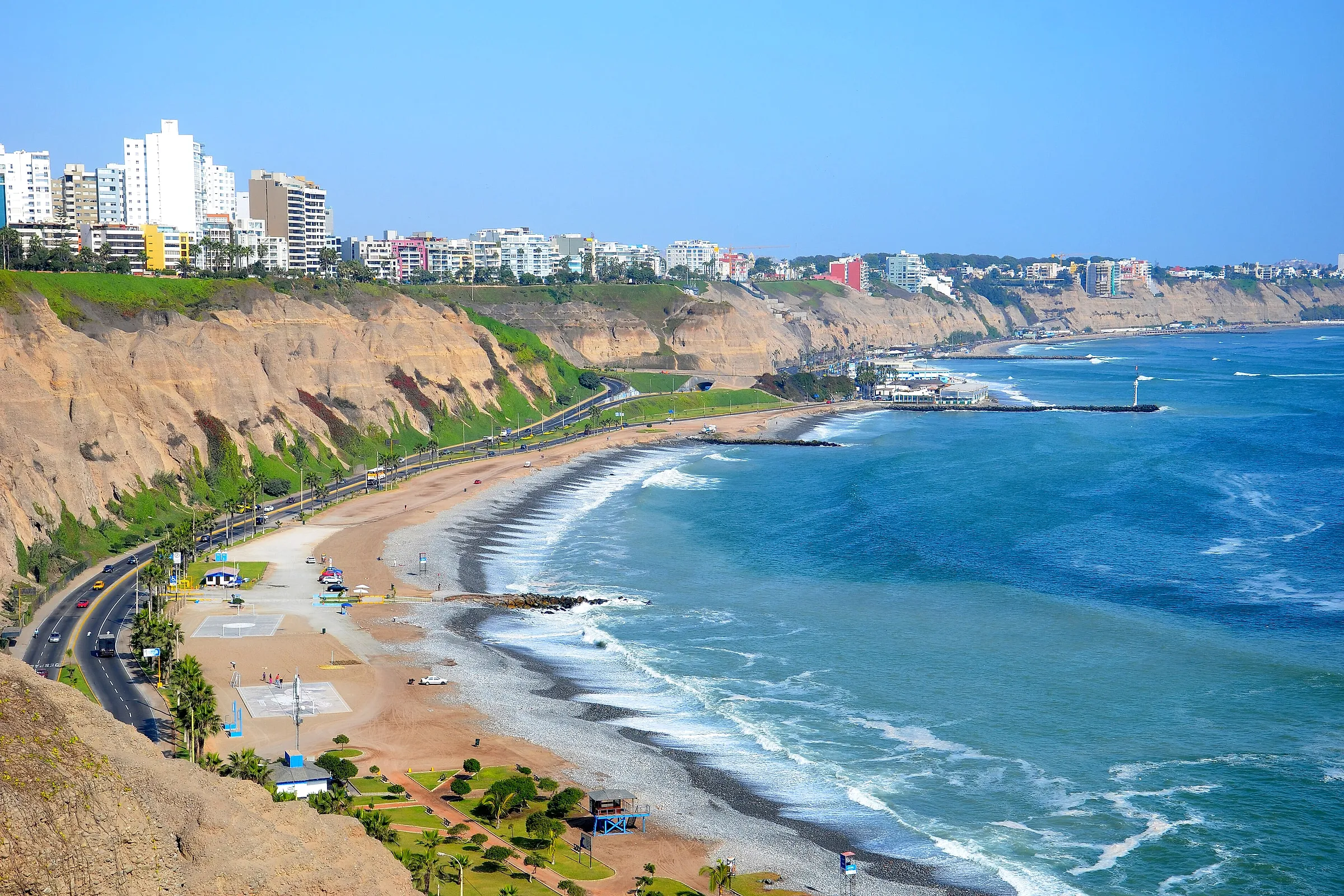
The Miraflores cliffs over the Costa Verde, Lima. Photo by Avodrocc, CC BY 2.0, via Wikimedia Commons.
Barranco and the Puente de los Suspiros
Barranco is the old seaside district next door, with low painted houses, bars and the Puente de los Suspiros. The wooden bridge opened on 14 February 1876, not in 1921 as many blogs say, and today it is 31 m long. It is free and open from 8:00 to 20:00. If you come by the Metropolitano bus, the Boulevard station is 450 m away, about ten minutes on foot. End the day here: the light goes down over the sea and Barranco fills up after dark.
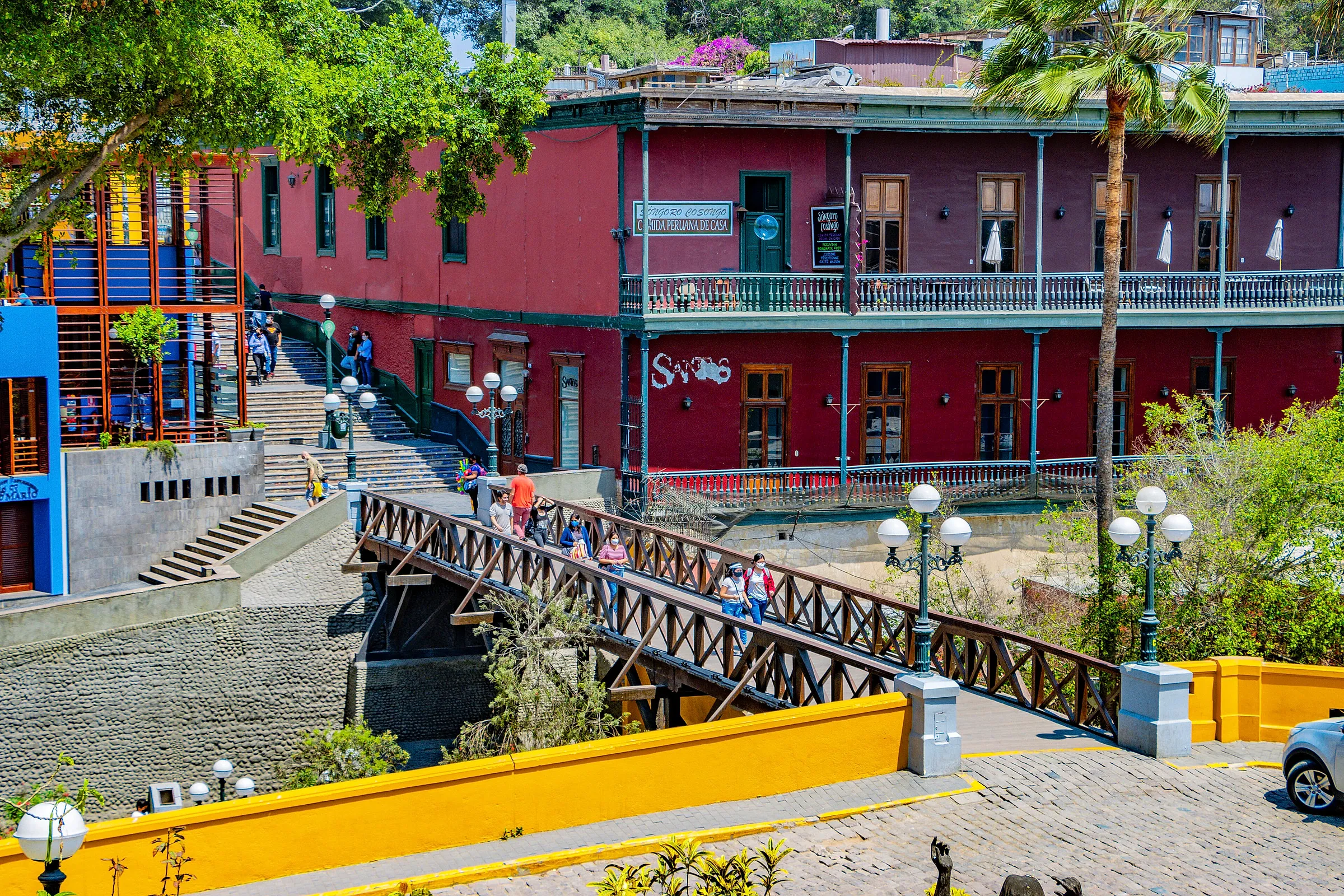
Puente de los Suspiros, Barranco. Photo by HLaiza, CC BY-SA 4.0, via Wikimedia Commons.
Day two: the historic centre and the Larco Museum
The colonial centre is 11 km from Miraflores, about 25 minutes by taxi according to the inventory record for the historic centre, though traffic can double that. Go in the morning.
The Plaza Mayor
UNESCO inscribed the convent of San Francisco as a World Heritage Site in 1988 and extended it in 1991 to the whole Historic Centre of Lima. The Plaza Mayor is its middle: the cathedral, the archbishop’s palace with its wooden balconies and the government palace all face the same square. Standing in it costs nothing.
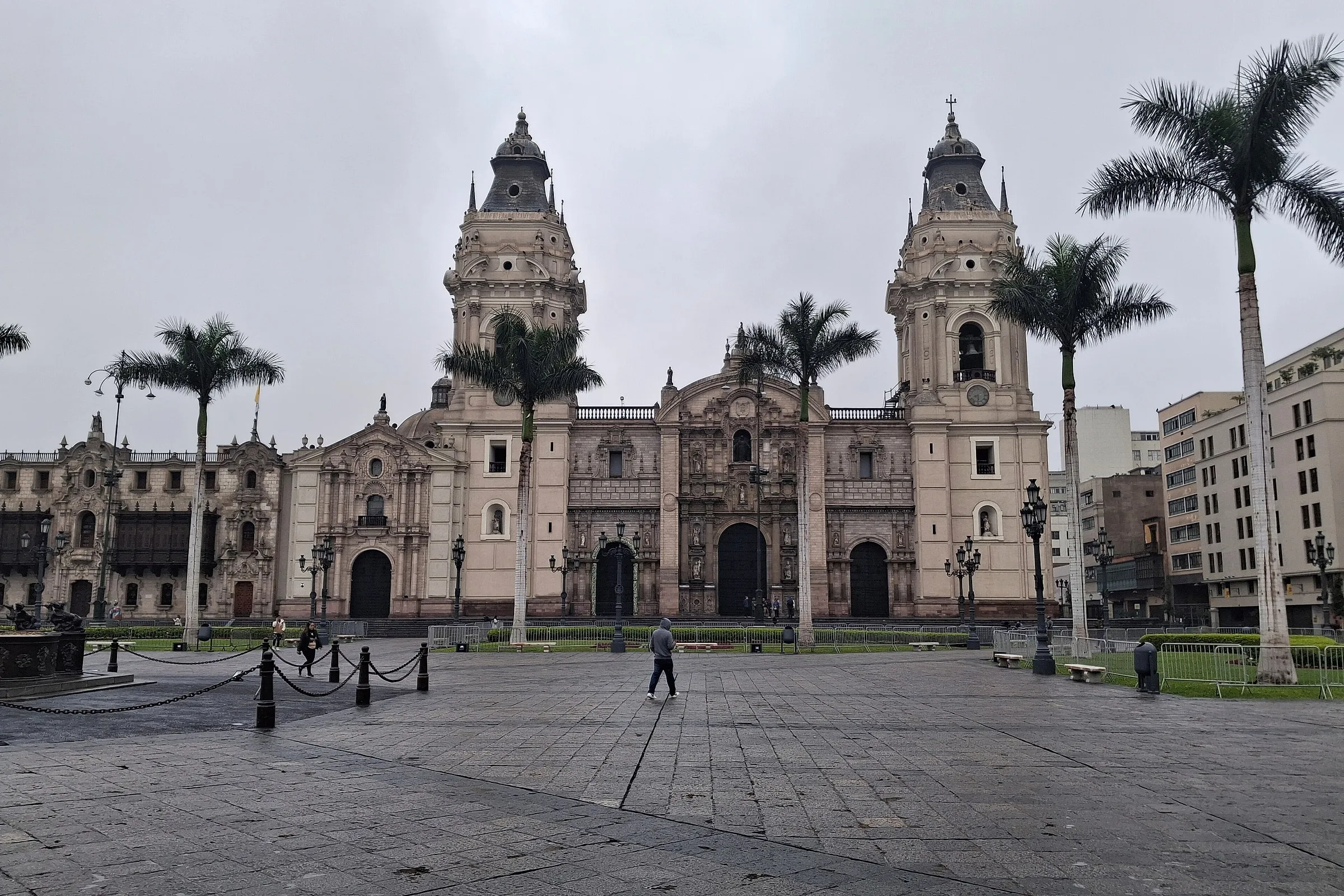
Plaza Mayor of Lima on a winter morning. Photo by Josefito123, CC BY-SA 4.0, via Wikimedia Commons.
The Cathedral of Lima
The cathedral charges foreign visitors S/ 30. It opens from 9:00 to 20:00 on weekdays, from 10:00 to 22:00 on Saturdays and from 13:00 to 19:00 on Sundays, so a Sunday morning does not work for it.
The San Francisco convent
Two blocks away is the convent that gave the centre its UNESCO status in the first place, known for its library and the catacombs under the church. We have not found its current fee and hours in an official record, so check them on the day.
The Larco Museum
After the centre, take a taxi to Pueblo Libre for the Larco Museum, the best single museum in Lima for the cultures that came before the Incas. It opens every day, holidays included, from 9:00 to 19:00, and general admission is S/ 50. The hours suit a late afternoon, after the centre has emptied out.
A night at the Circuito Mágico del Agua
The Circuito Mágico del Agua is a park of thirteen lit fountains that opened in 2007 in the Parque de la Reserva. Entry is S/ 5, the fountains run from 15:00 and the park stays open until 22:30. It is best after dark. Sources do not agree on the day it closes each week, so ask at your hotel the day before.
Eat ceviche at lunch
Lima is a food city, and with two days the way to see that is at lunch. In Lima ceviche is a midday dish, made with that morning’s fish, and our guides take travellers to eat it at lunch, not at dinner. Book a long lunch in Miraflores or Barranco on day one and keep the evening light. If you only have one proper meal in Lima, make it this one.
Half a day out of the city
If you have a third morning, or a late flight, there are two good ways to spend it.
Pachacamac
Pachacamac is a sanctuary of adobe temples in the desert at km 31.5 of the old Panamericana Sur, in Lurín, south of the city. Its oracle was consulted for more than 1,200 years, and the Incas built their Temple of the Sun on top. The ticket is S/ 15 for every nationality and covers the site museum. It opens Tuesday to Saturday from 9:00 to 17:00 and on Sundays until 16:00, and it is closed on Mondays. An on-site guide costs S/ 50 per group. For now the Pilgrims’ Route walk is suspended, so the visit follows the main circuit.
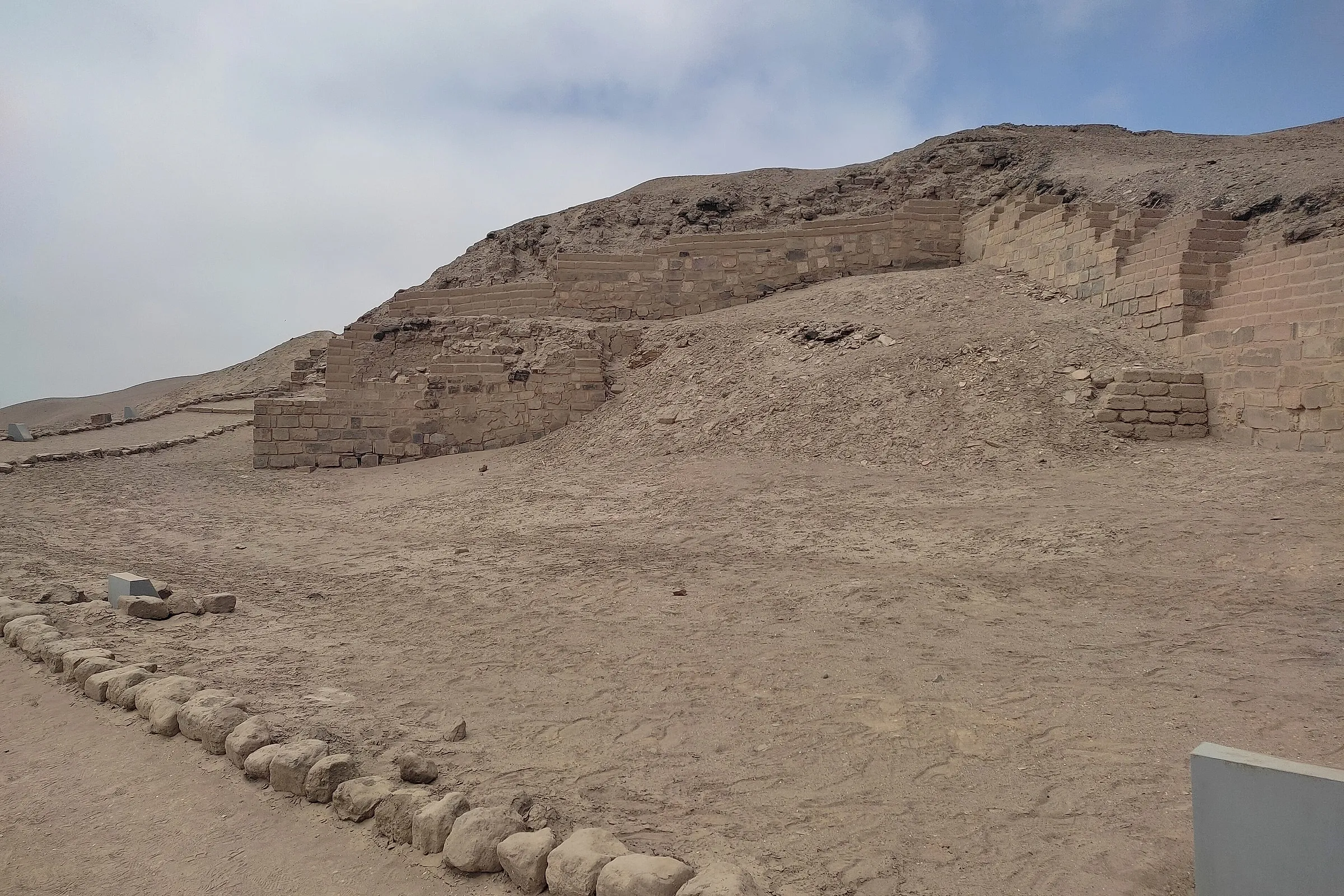
Temple of the Sun, Pachacamac. Photo by Arlette Rodriguez, CC BY-SA 4.0, via Wikimedia Commons.
The Palomino islands
The Palomino islands sit 11 nautical miles off Callao, 40 minutes by speedboat, and hold more than 5,000 South American sea lions, with Humboldt penguins on the rocks. Boats leave between 9:00 and 14:30, only with operators authorised by SERNANP, the park service, and the park fee for foreigners is S/ 11. The trip is cancelled when the port captain closes the port for swell, so keep it flexible.
For the longer coast to the south, with Paracas, the Ballestas islands and Huacachina, see our guide to a trip to the Nazca Lines.
Why Lima’s sky is grey
Lima is a desert city that almost never sees rain, and in winter it hardly sees the sun. According to PromPerú, the cold Humboldt current keeps a low layer of cloud over the city, so the sky looks overcast and it very seldom rains. In the southern winter SENAMHI, Peru’s weather service, expects high humidity, mist and drizzle at night and in the early morning, with the coast staying mostly dry. Limeños call that drizzle garúa. It changes nothing about what you can do; it only means that in July a clear sunset over the Malecón is luck, not a plan. The sunshine hours by month are in our guide to the best time to visit Peru.
Arriving at the new airport terminal
Lima’s Jorge Chávez airport moved to a new terminal on 1 June 2025, as Andina reported, and the only road access is now Avenida Morales Duárez. Older guides still describe the old building. We have not found an official journey time to Miraflores, and it depends on traffic, so allow plenty of margin when you fly out.
One or two days, and where Lima fits
One day is enough for Miraflores and Barranco, with a long lunch between them. Two let you add the centre and the Larco Museum without rushing. That is how our 8 or 11-day Machu Picchu tour packages begin: two nights in Lima, then the flight to Cusco.
If you are weighing up whether the city is safe to walk around, our guide is Peru safe has a section on Lima with what four governments say. For where Lima fits in the rest of the country, see the best places to visit in Peru, and for the trips we run, our Peru tours.
Asked before booking
The questions we get on this
- What is the altitude difference between Lima and Cusco?
- About 3,240 m. Peru's national tourism inventory puts the Plaza Mayor of Lima at 163 m above sea level and the Plaza de Armas of Cusco at 3,400 m. Flying from one to the other takes you from the coast to the high Andes in a single short flight, which is why the order of a Peru trip matters.
- Can I get altitude sickness in Lima?
- Lima is a coastal city. The tourism inventory gives 163 m for the Plaza Mayor, 91 m for Huaca Pucllana and 52 m for the Puente de los Suspiros in Barranco, so the altitude is not a concern there. It starts to count when you fly to Cusco, at 3,400 m, or go up to Puno and the lake.
- Is Lima or Cusco nicer?
- They do different jobs. Lima, at sea level, is for food, the sea cliffs of Miraflores and the museums, and it is an easy first night. Cusco, at 3,400 m, is Inca stone, the Andes and the road to Machu Picchu. Most travellers want both, with one or two days in Lima before Cusco.